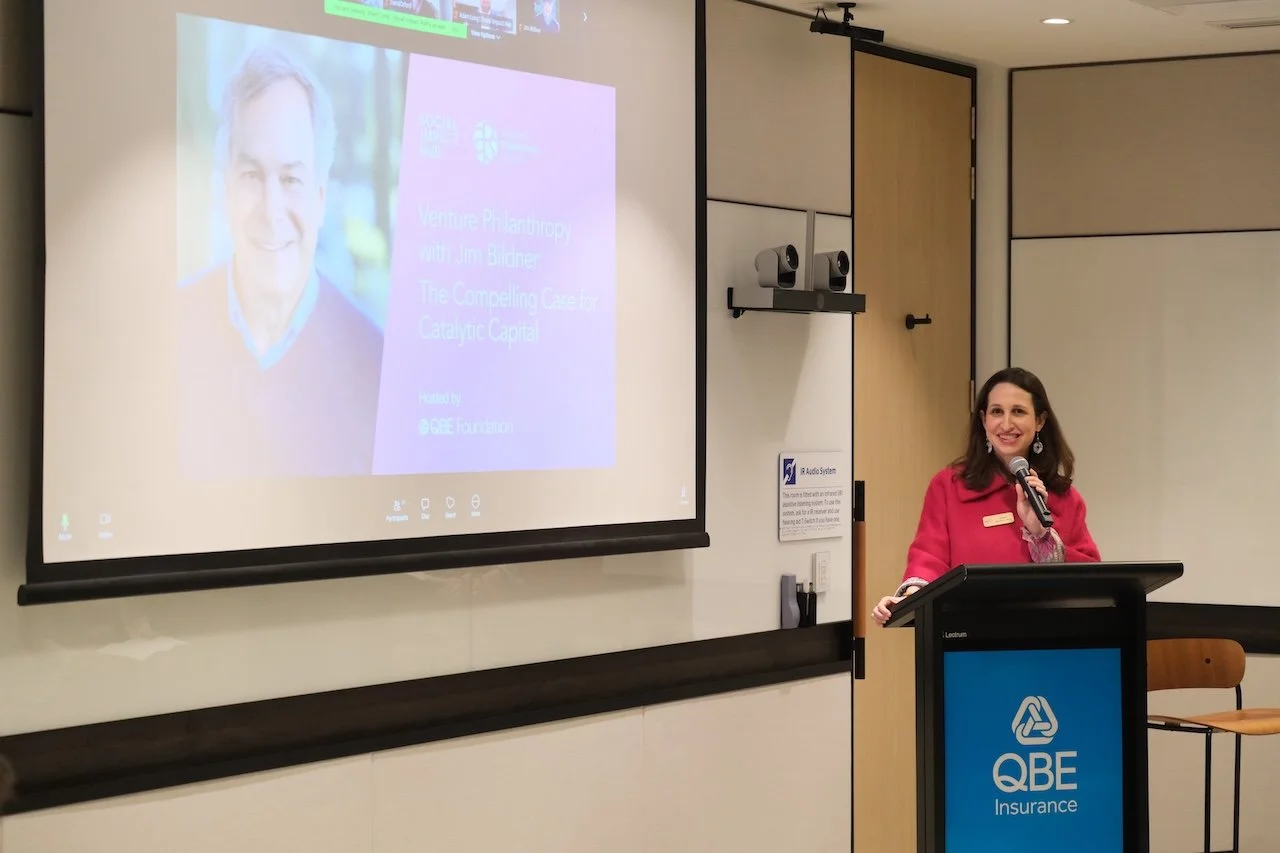
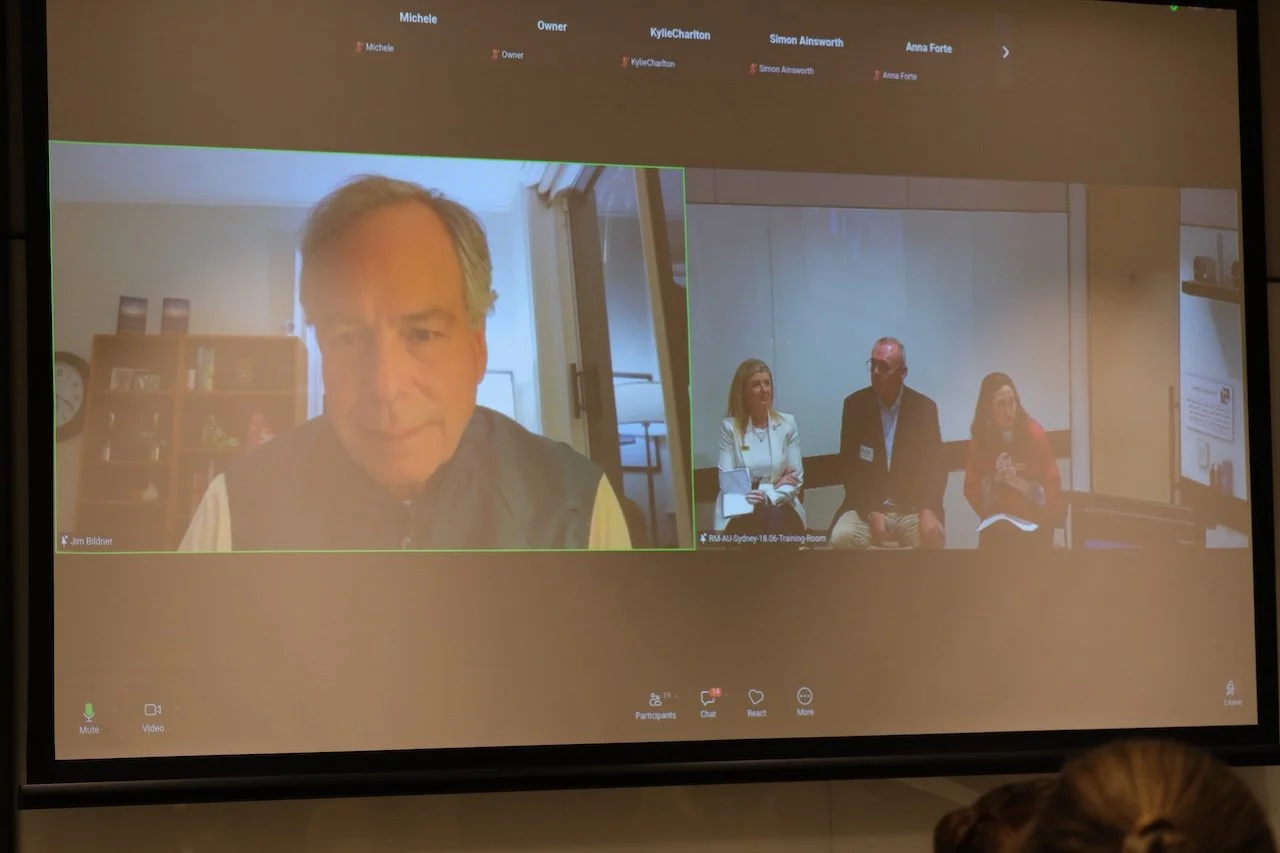
It was 4:00 a.m. in Boston when Jim Bildner appeared on screen. It was 6:00 p.m. in Sydney, and more than 60 funders had gathered to hear him, in the room at QBE's George Street offices and online. He opened with a point that would run through everything else: money alone rarely moves the needle.
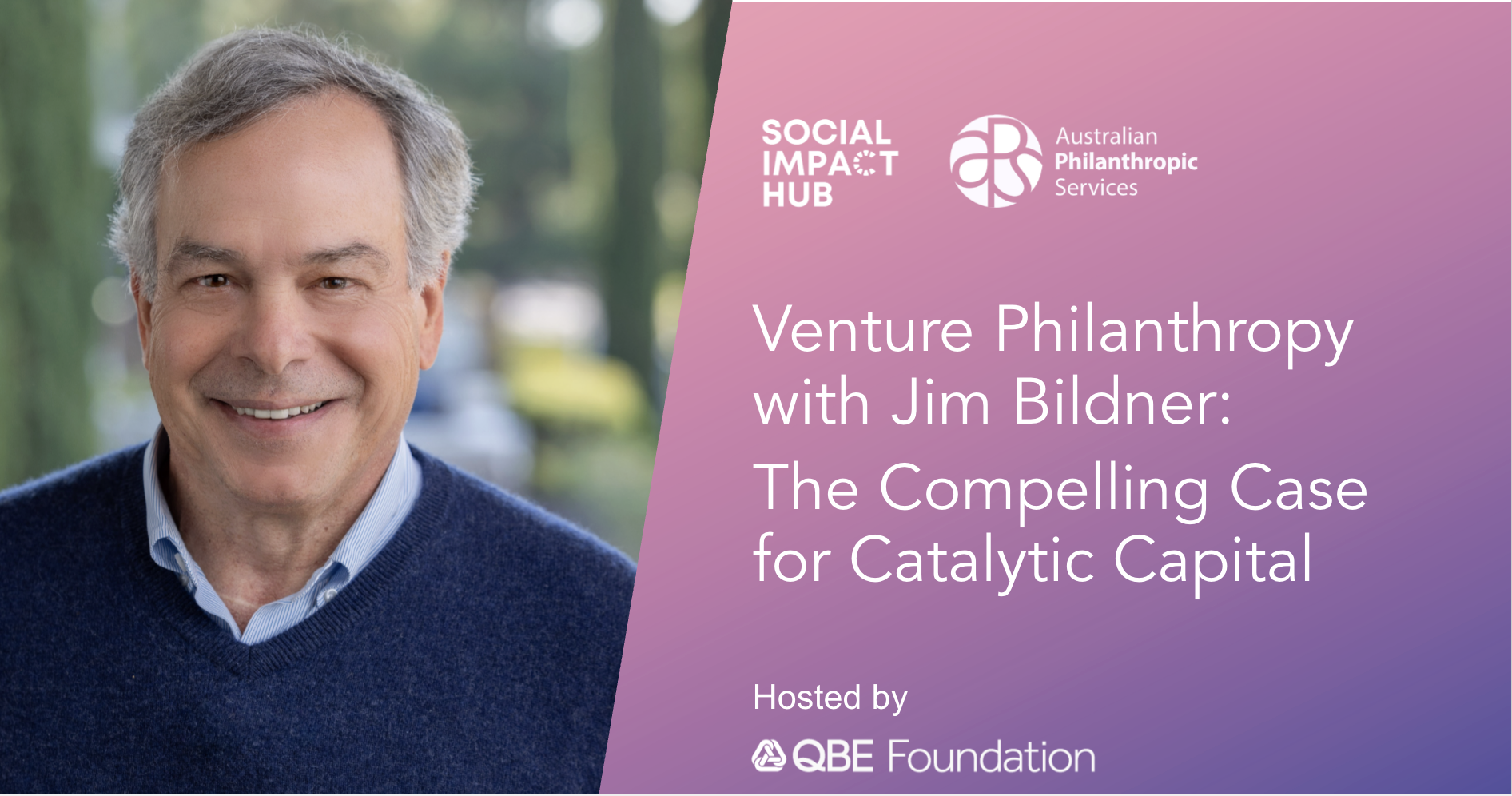
"Venture Philanthropy with Jim Bildner: The Compelling Case for Catalytic Capital" was held on 10 September 2026. It was co-presented by Social Impact Hub and Australian Philanthropic Services (APS) and hosted by the QBE Foundation. The evening brought funders from private ancillary funds, family and corporate foundations, and giving funds into one room for a conversation about what philanthropy can be when it goes beyond the cheque.
Jim Bildner is chief executive of the Draper Richards Kaplan Foundation (DRK) and an adjunct lecturer in public policy at Harvard Kennedy School. That he took the call before dawn, from the other side of the world, told you something before he'd made his case: this is someone who takes the work seriously. Over two decades, DRK has made more than 250 early-stage social enterprise investments across four continents, and the pattern it keeps seeing is that capital paired with sustained, hands-on support does far more than capital by itself.
A different model of funding
What does that support look like in practice?
DRK backs organisations with unrestricted funding of around $300,000 over three years, money the organisation can spend on what it actually needs rather than on a narrow project a funder has pre-approved.
Alongside the cash comes hands-on help: board seats, portfolio support, an annual retreat, and peer-to-peer learning between the enterprises DRK funds.
A fair amount of this cuts against how philanthropy is usually done, and Bildner was candid but gracious about it, sharing what he's learned rather than telling the room what to do. Take DRK's approach to board seats. In some funding cultures, a philanthropist taking a board seat at an organisation they support is seen as overstepping, even improper. Bildner sees it differently. The board member acts as a kind of dispatcher, pulling in the strategy, finance, marketing, recruitment, and other help sitting in DRK's portfolio team and directing it to the organisation at the moment it's needed. The seat is not about control; it's the delivery mechanism for the support. The value DRK offers, he said, was never really the money. It was the time, judgement, and networks that come with it, given to leaders at the stage when those things are hardest to find.
He was also candid about time horizons. Change takes longer than anyone expects, so DRK funds accordingly. It looks for organisations with a credible path to reaching 10,000 people within three to five years, on the view that an organisation serving 10,000 can go on to serve 50,000, then 500,000, and that at real scale the work becomes resilient. In DRK's experience, services delivered to that many people are hard to unwind, whatever happens with politics, regulation, or funding cycles.
“Great to hear from a global heavyweight in Impact Investing. Very inspiring indeed.”
Catalytic capital, close to home
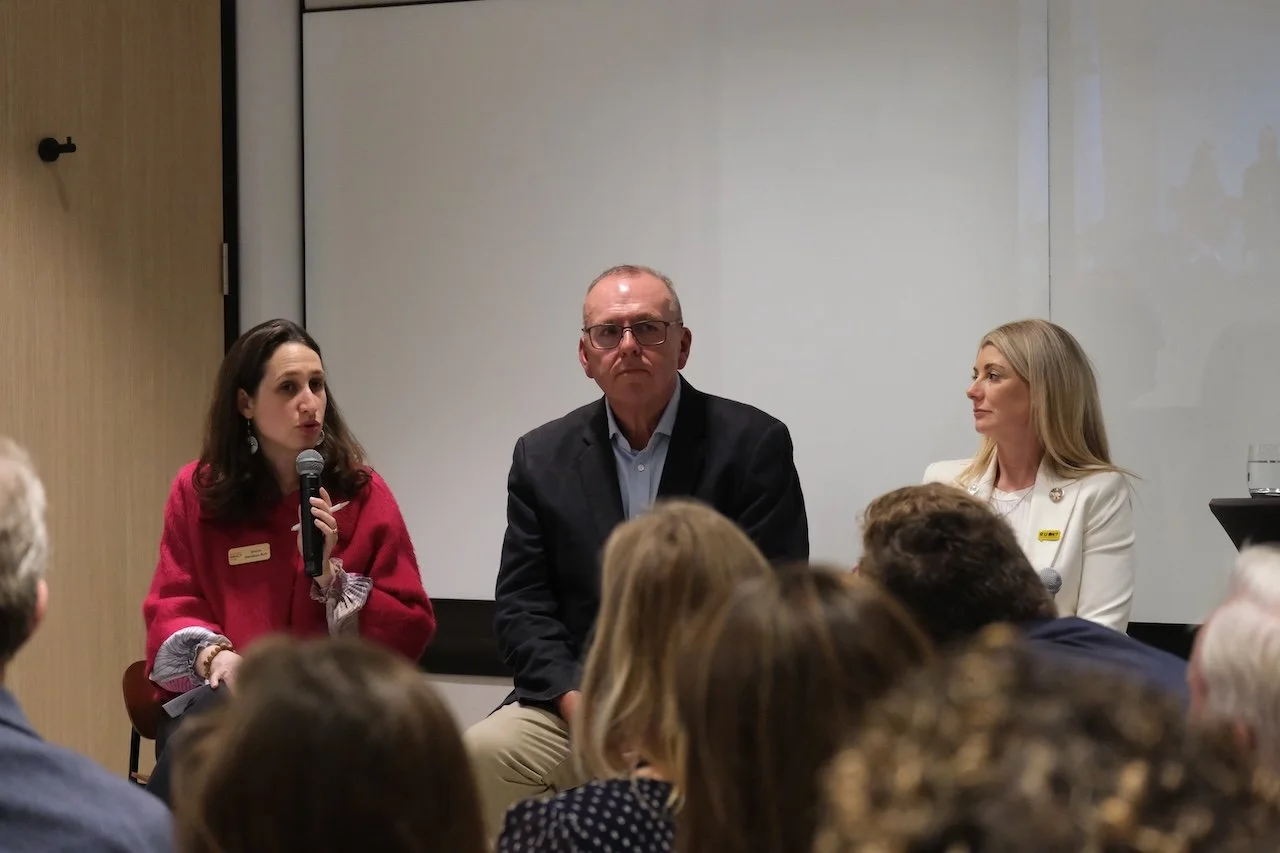
The panel, moderated by Social Impact Hub founder Jessica Mendoza-Roth, turned the keynote's ideas toward a practical question: what can Australian funders actually do with them, given the capital available to social entrepreneurs here is a fraction of what DRK portfolio organisations have access to in the United States?
Catalytic capital, Bildner said, mostly doesn't originate in the US, and the winners of prizes like the Audacious Project (one in five of which have gone to a DRK portfolio organisation) are often not US organisations.
The job for Australian funders then is to build organisations here that global funders will want to back. That, he said, comes down to three things:
Growing the organisation's capacity
Telling its story well
Developing clear, credible metrics that prove the impact is real and can scale.
As one of DRK's entrepreneurs once put it: without data you're just another opinion in the room, but with it, you're the one people listen to.
Lauren Hicks, Head of Social Impact at QBE and the person who leads the QBE Foundation globally, made the local case for catalytic capital concrete. Catalysing Impact, the Foundation's program delivered with Social Impact Hub, is built on exactly the principle Bildner described: capital and capability together. The grant is structured to change the risk profile of the enterprise so that other funders will follow. In 2025, $1.02 million in QBE grants helped assemble a total capital stack of $3.77 million, drawing in $2.75 million of external commitments. Hicks was direct that the money is not the main event. Social enterprises already run like businesses; what they can rarely afford is expertise. So each grant comes paired with capability: an investment-readiness diagnostic, tailored advisory and mentoring through Social Impact Hub's Professional Impact Network, a design-thinking hackathon, and skilled-volunteering projects where QBE employees work alongside a team on a real challenge.
Hicks also pointed to a structure QBE uses in the US but hasn't yet replicated here: giving into a donor-advised fund that invests in impact deals, which has already returned capital.
Jon Stretch brought the perspective of an individual funder. As chair of the Blueshore Charitable Trust, a small family private ancillary fund (PAF) focused on youth mental health and homelessness, he spoke about how his family came to those causes through personal experience. Bildner later called it the most moving moment of the night. Stretch's contribution made a quiet argument that runs against the idea that engaged, hands-on giving is only for large foundations. Meaningful involvement can start at a modest scale and still matter to the organisations on the receiving end.
The feedback afterwards captured the shift the evening was asking for.
“Thanks for bringing the sector together to challenge some of our philanthropic norms and helping us to think bigger about what is possible.”
“We are learning quickly that simply donating money is not necessarily what our NFPs want or need. Jim and the panel’s examples of what is possible have opened our eyes even further.”
Putting capital and capability to work
The ideas from the evening are ones we help funders put into practice every day. Social Impact Hub is a certified B Corp that advises, educates, and mobilises capital for impact, working with foundations, giving funds, and corporate funders to give in the ways this event described: pairing capital with capability, crowding in other funding, and backing organisations and their leaders for the long term.
For a deeper look at the five ideas the evening raised, read the follow-up piece on the Impact Investing Hub.

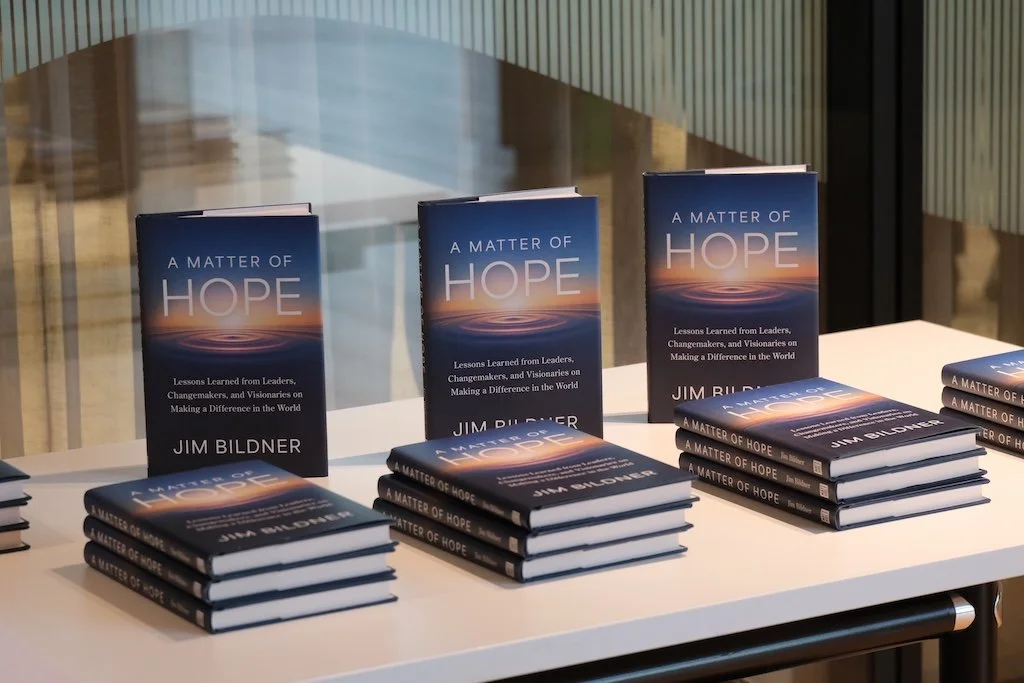
Jim Bildner's book, A Matter of Hope, is available now.
Watch the recording of the event